
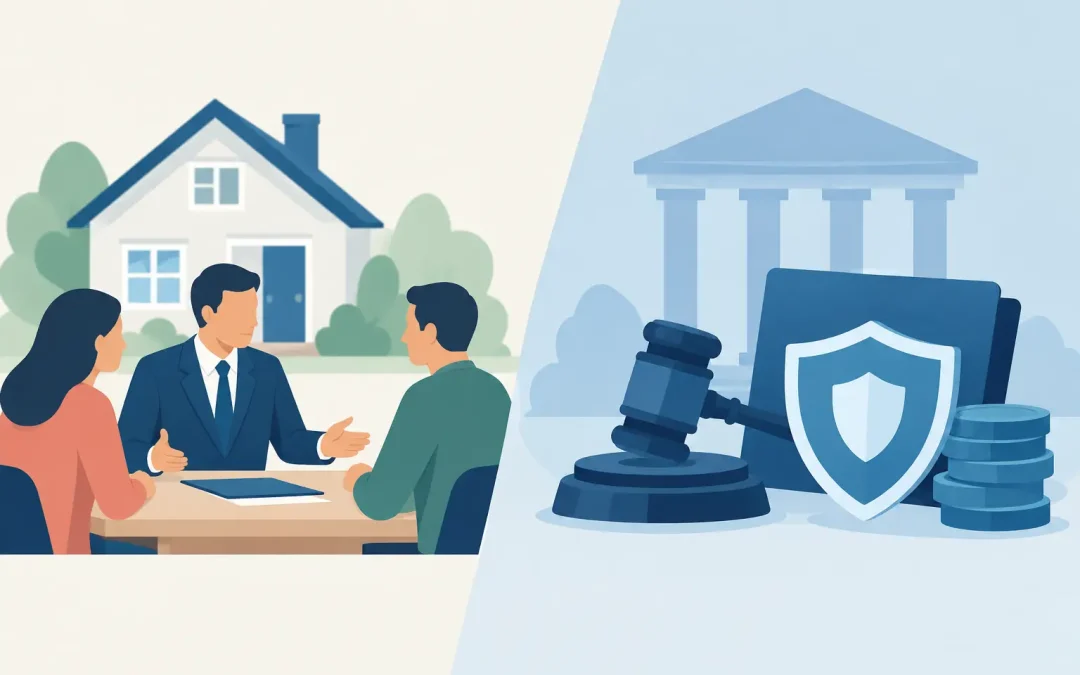
A foreclosure complaint, missed-payment notice, or sheriff’s sale date can make every option feel urgent. For New Jersey homeowners, foreclosure mediation versus bankruptcy is not simply a choice between two legal processes. One may create a direct opportunity to negotiate with the lender. The other may immediately stop collection activity and address broader debt problems. The right path depends on your income, equity, loan status, other debts, and whether keeping the home is financially realistic.
Neither option should be treated as a delay tactic. Each has deadlines, paperwork, costs, and long-term consequences. A clear assessment early in the process can preserve choices that become harder to use once a foreclosure judgment or sale is near.
Foreclosure Mediation Versus Bankruptcy in New Jersey
Foreclosure mediation is a structured negotiation process. Its purpose is to bring the homeowner and mortgage lender or servicer together to explore a resolution before the property is sold. Depending on the facts, that resolution might include a loan modification, repayment plan, forbearance agreement, short sale, deed in lieu of foreclosure, or another workout option.
Bankruptcy is a federal court process designed to address debt. Filing a bankruptcy case usually triggers an automatic stay, which generally stops foreclosure activity, collection calls, lawsuits, wage garnishments, and other collection efforts while the case proceeds. The stay is powerful, but it is not permanent in every situation. A lender may ask the bankruptcy court for permission to continue foreclosure, particularly when the homeowner cannot make ongoing mortgage payments or propose a workable plan.
The practical distinction is straightforward. Mediation focuses on reaching an agreement about the mortgage and property. Bankruptcy addresses the homeowner’s larger financial picture, which may include credit cards, medical bills, personal loans, tax obligations, and other secured or unsecured debts.
What Foreclosure Mediation Can Accomplish
For a homeowner who has experienced a temporary financial setback but now has stable income, mediation can be a productive setting to seek a sustainable mortgage solution. It requires preparation. Lenders commonly request recent pay stubs, tax returns, bank statements, a hardship explanation, a household budget, and a complete loss-mitigation application.
A well-supported proposal matters. If a homeowner can show reliable income and explain how a modified payment or repayment arrangement would be affordable, the lender has more information to evaluate a possible workout. Mediation can also create accountability by requiring the parties to exchange information and attend discussions rather than allowing the file to sit unanswered with a loan servicer.
Still, mediation does not require a lender to offer a modification or accept a proposal. A lender may determine that the borrower does not meet program guidelines, that the income documentation is incomplete, or that the proposed payment is not feasible. Homeowners should enter mediation with a realistic goal and a backup plan.
Mediation may also help a homeowner who cannot keep the property but wants to avoid a rushed sale or reduce the damage of foreclosure. Negotiating time for a private sale, considering a short sale, or exploring a deed in lieu may be preferable to waiting for a sheriff’s sale. Those options carry their own financial and tax considerations, so the terms deserve careful review.
When mediation may be the stronger first step
Mediation may make sense when the mortgage is the central problem, the homeowner has enough current or expected income to support a revised payment, and there is a meaningful basis to request loss mitigation. It can be especially useful when there are questions about servicing errors, missing documents, or a lender’s review of a prior application.
It is less likely to solve the problem when the mortgage payment remains unaffordable even after a possible modification, or when significant non-mortgage debt is consuming the household budget.
How Bankruptcy Changes the Timeline
The immediate benefit many homeowners associate with bankruptcy is the automatic stay. Once a bankruptcy case is filed, creditors generally must stop collection activity without first obtaining approval from the bankruptcy court. That can provide breathing room when a sale date is approaching or when a homeowner is facing multiple collection actions at once.
The two most common consumer chapters serve different purposes. Chapter 7 may discharge certain unsecured debts for eligible filers, but it does not automatically make an unaffordable mortgage affordable. If the homeowner wants to retain the property, they generally must still stay current on mortgage obligations or reach an agreement with the lender.
Chapter 13 allows eligible individuals with regular income to propose a repayment plan, commonly lasting three to five years. Mortgage arrears may often be addressed through that plan while the homeowner continues making ongoing mortgage payments. This structure can be valuable for a household that has sufficient income now but needs time to catch up on past-due amounts.
Bankruptcy is not a free reset button. It involves court filings, detailed financial disclosures, credit consequences, legal fees, and strict plan requirements. A Chapter 13 case can fail if payments are not sustainable. Bankruptcy also may not eliminate every debt, including certain taxes, student loans, domestic support obligations, or debts secured by property the homeowner intends to keep.
Key Trade-Offs Before Choosing a Path
The timing of the foreclosure case matters. If there is time to submit a complete loss-mitigation package and negotiate, mediation may be the more focused approach. If a sheriff’s sale is imminent, a bankruptcy filing may offer immediate protection while the homeowner evaluates longer-term options. Procedures and deadlines can change, so relying on an old notice or a neighbor’s experience is risky.
The affordability question matters even more. A homeowner should compare the likely monthly payment after a modification with actual net household income, necessary expenses, property taxes, insurance, and future maintenance costs. Keeping a house at any cost is not always the best financial outcome. In some cases, an orderly sale and a plan for moving forward provides more stability than taking on a payment that will fail again.
Equity also deserves attention. A home with substantial equity may present options that should not be overlooked, such as a conventional sale, refinancing if feasible, or a negotiated sale timeline. Conversely, a homeowner with little or no equity may need to weigh the financial benefit of retaining the property against the ongoing obligations.
Finally, look beyond the mortgage. Someone with manageable credit card debt and a temporary income interruption may be well served by mortgage mediation. Someone who is behind on the mortgage, facing collection lawsuits, and carrying substantial unsecured debt may need to evaluate bankruptcy alongside foreclosure-defense options.
Can You Use Mediation and Bankruptcy Together?
Sometimes, yes. A homeowner may pursue loss mitigation with a lender before filing bankruptcy, during a bankruptcy case, or after obtaining relief from bankruptcy. The processes can overlap, but they must be coordinated carefully. For example, a pending loan-modification review does not guarantee that a foreclosure sale will be postponed. Likewise, filing bankruptcy may pause foreclosure but does not force a lender to approve a modification.
A coordinated strategy should identify the immediate deadline, the documents needed for a lender review, the amount of mortgage arrears, the status of other debts, and the household’s ability to make payments going forward. The goal is not merely to postpone a sale. It is to choose a route that has a credible chance of producing a stable result.
Questions to Answer Before You Act
Start with the documents. Gather the foreclosure complaint and notices, the mortgage statement, any denial or approval letters from the servicer, proof of income, recent bank statements, tax returns, and a list of all debts. These records help clarify whether the issue is a short-term delinquency, a disputed servicing problem, or a broader debt crisis.
Then ask practical questions: Can you afford the regular mortgage payment now? Can you afford a modified payment? How much is needed to cure the default? Is there a sheriff’s sale date? Do you have equity to protect? Are other creditors creating pressure that mortgage mediation alone cannot solve?
The answers may point strongly in one direction, or they may show that several options should be considered at the same time. Legal guidance can be particularly valuable when deadlines are close, a prior modification was denied, the property has equity, or the homeowner is considering Chapter 13.
A home foreclosure is personal, but the decisions surrounding it should be grounded in documents, numbers, and a workable plan. Scipio Law offers a no-charge 30-minute consultation to help New Jersey homeowners discuss the circumstances of their matter and identify practical next steps. Acting before the next deadline can make the difference between limited choices and a strategy built around your future.
Recent Comments